Yours to Keep: The Real Reasons British Collectors Never Abandoned the Disc
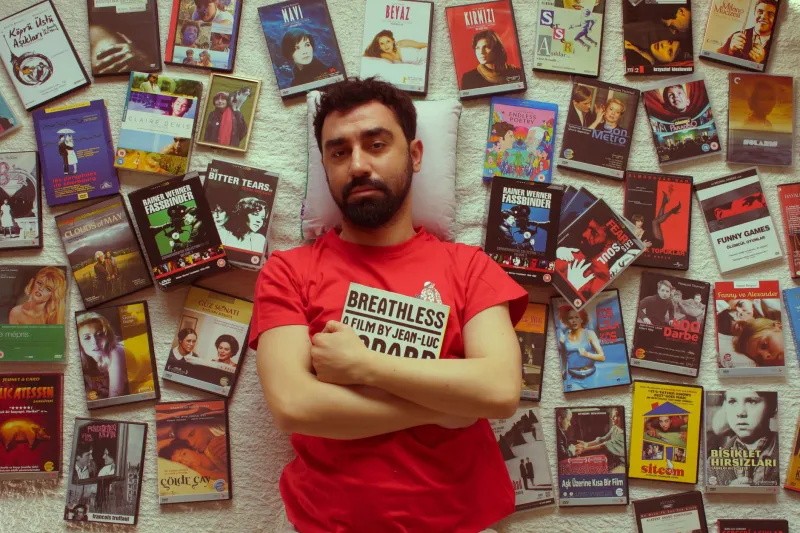
Every few years, a tech journalist somewhere writes the piece. You know the one. Physical media is finished. Streaming has won. Nobody needs shelves anymore. The disc is dead.
And every time, the people with shelves full of DVDs read it, shrug, and go back to deciding which film to watch from their collection.
The predictions have been wrong for two decades now. Not just slightly wrong — comprehensively, embarrassingly wrong. Physical media sales in the UK have declined, yes, but they haven't collapsed into irrelevance. A dedicated and growing community of collectors continues to buy, curate, and invest in discs with genuine enthusiasm. The interesting question isn't whether they're doing it. It's why.
The Broadband Problem Nobody Wants to Talk About
Let's start with something practical, because sometimes the most mundane explanation is also the most honest one.
Britain's broadband infrastructure is, outside of major urban centres, frequently terrible. Anyone who's tried to stream a film in a rural part of Wales, a village in Northumberland, or a market town in Somerset will have a story about buffering, compression artefacts, or the signal simply giving up entirely during a crucial scene. The UK government has been promising to solve this for years. The reality on the ground remains patchy.
For people in these areas — and there are millions of them — a DVD isn't a nostalgic affectation. It's a practical necessity. It plays reliably, at full quality, every time, regardless of what the local exchange is doing. That's not a small thing. That's the entire point of owning physical media in the first place.
Even in cities, where broadband speeds are generally more dependable, collectors point to a different kind of reliability anxiety. What happens when the streaming service goes down? What happens when your subscription lapses and the film you wanted to watch tonight is suddenly inaccessible? With a disc on the shelf, none of these questions arise.
The Licensing Lottery
If the broadband argument is practical, this one is philosophical — and it makes collectors genuinely angry when you bring it up.
Streaming services do not sell you films. They sell you access to films, for as long as they hold the rights to them. Those rights are subject to negotiation, renewal, and the whims of corporate strategy. A title that's available on a platform today may not be there in six months, for reasons that have nothing to do with its quality or your desire to watch it.
This has happened repeatedly, and British viewers have felt it acutely. Entire back catalogues have shifted between platforms. Films have been quietly removed without announcement. Classic British television series — the kind that defined generations of viewing — have disappeared from streaming libraries and not resurfaced anywhere accessible.
Owning a DVD is, by contrast, an entirely different transaction. You pay once. The disc is yours. Nobody can remove it from your shelf because a licensing deal expired. Nobody can decide that the film no longer fits their platform's brand and quietly delete it from your library. The permanence of physical ownership is not a trivial benefit — for many collectors, it's the entire point.
"I had three films on a streaming service that I'd been meaning to rewatch," says one collector from Bristol we spoke to. "All three were gone within a year. I'd have been better off buying the discs to begin with. At least then I'd still have them."
The Tactile Argument
There's another dimension to this that gets dismissed too easily by people who've never properly engaged with it: the physical experience of owning films.
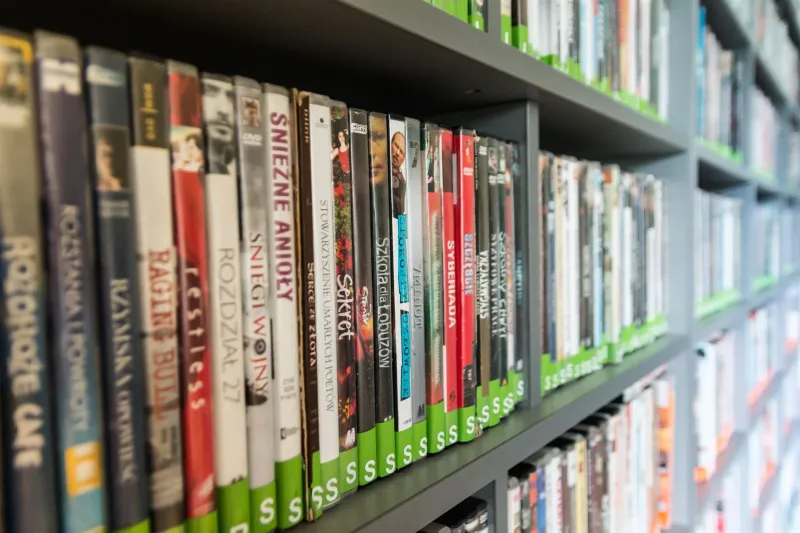
A disc collection is a tangible, browsable, curated thing. It occupies space in a room. It has weight and texture. You can run your finger along a shelf and feel the spines. You can pull something out on impulse and decide to watch it without navigating a recommendation algorithm designed to push you towards whatever the platform needs to shift this month. The experience of choosing from a physical collection is fundamentally different from scrolling through a grid of thumbnails — and for many people, it's considerably more satisfying.
This is not mere sentimentality. There's genuine cognitive value in the kind of browsing a physical collection enables. You see things you'd forgotten you owned. You make unexpected connections between films. You rediscover something you bought years ago and never got around to watching. Streaming services, for all their convenience, are not particularly good at facilitating this kind of serendipitous discovery.
The packaging matters too. A well-produced disc release — with thoughtful cover art, a properly written booklet, and menus that reflect the character of the film — is itself a small work of design. The boutique labels that British collectors tend to favour understand this instinctively. Their releases are objects worth having, not just content delivery mechanisms.
Quality That Doesn't Compromise
Streaming compression is a real and ongoing frustration for anyone who cares about picture and sound quality. The bitrates that streaming services use to deliver content are, in most cases, lower than what a Blu-ray or even a well-mastered DVD can provide. In a darkened room on a decent screen, the difference is visible.
For collectors who've invested in a proper home cinema setup — and there are plenty of them across Britain — this isn't a minor quibble. It's a fundamental reason to prefer disc. The image they're watching is the best available version of the transfer, not a compressed approximation of it.
The Streaming Survivor
None of this is to say that streaming has no value. Most collectors use it, happily, for casual viewing and discovery. But they've learned to treat it as a complement to their physical collection rather than a replacement for it.
The disc endures because it does things streaming cannot: it guarantees ownership, delivers consistent quality, works without an internet connection, and provides a physical, browsable experience that a digital library simply doesn't replicate. These aren't small advantages. For Britain's collectors, they're reasons to keep buying — and to feel quietly vindicated every time another streaming service shuffles its catalogue.