One Series, No Second Chances: The Cancelled British Dramas That Disc Kept Alive
Television has always been a brutal medium. A show can spend years in development, attract a genuinely talented cast, earn warm reviews, and build a small but passionate audience — and still find itself cancelled before a second series is commissioned. The reasons are rarely about quality. Scheduling decisions, budget pressures, a change in channel priorities, a new controller with different tastes: any of these can end a promising run before it's properly begun.
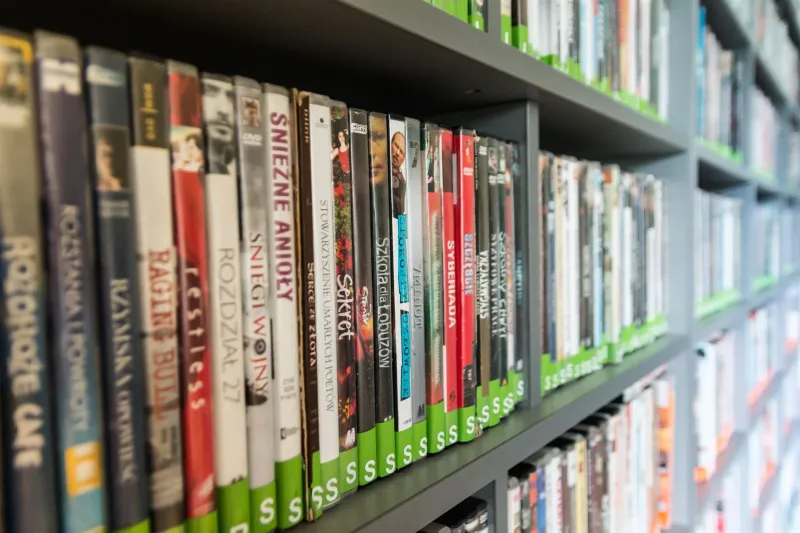
What physical media did — quietly, without much fanfare — was refuse to let those cancellations be final. A DVD release transformed a cancelled single series from a sad footnote in a production company's back catalogue into something you could hold in your hands, put on a shelf, and return to whenever you chose. The disc didn't care that ITV had moved on. It didn't know the BBC had decided the audience wasn't broad enough. It just sat there, patient and permanent, waiting for the right viewer to find it.
For collectors, these releases represent something genuinely special: the physical preservation of television that the industry itself had decided to forget.
The Ones That Deserved More
Cast your mind back to the mid-2000s and the particular quality of British drama that was coming out of smaller production companies working with Channel 4 and BBC Two. There was a willingness to take risks with structure, with tone, with subject matter — and occasionally those risks produced something remarkable that simply didn't find its audience in the original broadcast slot.
Ultraviolet — the 1998 Channel 4 series, not the film — is a textbook example. Six episodes of genuinely intelligent vampire drama, treating its supernatural premise with forensic seriousness and building a world that felt both contemporary and deeply unsettling. It was critically admired, developed a devoted following, and ended on a note that clearly anticipated a continuation. The continuation never came. But the DVD release did, and through it, the show found the audience it should have had in 1998 — a decade late, but no less enthusiastic for that.
The disc made that discovery possible in a way that streaming, with its recommendation algorithms and ephemeral availability, still doesn't quite replicate. Owning the Ultraviolet box set meant you could hand it to someone, tell them to trust you, and watch their reaction across a weekend. That's a different kind of cultural transmission.
Comedy's Forgotten Gems
Drama doesn't hold a monopoly on this phenomenon. British comedy has its own rich tradition of brilliant single-series runs that were never renewed — and the DVD shelf is where several of them found their most devoted audiences.
The comedy-drama hybrid space has been particularly fertile ground for this. Shows that blended genuine laughs with unexpected emotional weight — the kind of tonal balance that's difficult to pitch to a commissioner and even harder to sell in a scheduling meeting — often struggled to find a broadcast home that understood them. But on disc, away from the pressure of live ratings and competitive scheduling, they could be experienced exactly as intended.
Collectors who've assembled runs of British comedy from the 2000s and early 2010s will almost certainly have a few of these on their shelves without necessarily having sought them out. They turn up in charity shops and car boot sales, still in their original packaging, evidence of a small initial print run that didn't sell through at the time but has since become sought after by anyone who's seen the show and wanted to own it properly.
Genre Television and the Cult of the Incomplete
Science fiction and fantasy television occupies a particularly poignant corner of this story. British genre drama has always operated on shoestring budgets relative to its American counterparts, and the combination of ambitious ideas and limited resources means that many genuinely inventive shows ended before they could fully realise their potential.
This creates a specific kind of collecting experience. Owning the DVD of a cancelled British sci-fi series — one that built a compelling premise across six episodes and then stopped — is partly an act of appreciation for what was achieved and partly an act of mourning for what wasn't. The disc contains a complete story in one sense (most single-series runs do reach some kind of conclusion, even if it wasn't the intended one) and an incomplete story in another.
But there's something valuable in that incompleteness. It preserves the show's ambition intact, untarnished by the compromises and creative drift that sometimes afflict longer runs. The cancelled show on DVD is, in a strange way, always at its best — frozen at the moment of its greatest promise.
The Preservation Argument
It's worth being direct about what collecting these discs actually means in practical terms. British television archives have a complicated history. The BBC's practice of wiping and reusing videotape in the 1960s and 1970s destroyed significant portions of the national broadcast heritage — a loss that still reverberates through the collecting community and among television historians.
The situation is better now, but not perfect. Streaming rights come and go. A show that's available on a platform today might be removed when the licensing deal expires and never return. Broadcast schedules are no longer a reliable record of what was made and transmitted.
The DVD, by contrast, is a fixed point. Once pressed and distributed, it exists independently of any platform, any rights agreement, any corporate decision. The collector who owns a complete single-series run of a cancelled British drama owns something that no streaming service can take away — a permanent record of the fact that this show existed, that it was good, and that someone thought it worth preserving.
Building the Right Kind of Shelf
For collectors who want to actively seek out these titles, charity shops remain the best hunting ground. Single-series sets from the 2000s and early 2010s turn up regularly, often in excellent condition, at prices that make the decision to take a chance on something unfamiliar very easy.
Online marketplaces are worth monitoring for rarer pressings, particularly of shows that had limited initial distribution or were released by labels that no longer exist. The combination of a cancelled show and a defunct distributor can make for a genuinely scarce physical object — one that's worth tracking down precisely because the odds of it appearing on any streaming service are vanishingly small.
What you end up with, assembled over time, is a shelf that tells a different story to the mainstream television canon. Not the shows that ran for seven series and became cultural events, but the ones that got one shot, made the most of it, and deserved so much more. Their DVD releases are the only second chances they ever got. That's worth something.