Still Delivering: The Last Custodians of Britain's Postal DVD Rental Library
Still Delivering: The Last Custodians of Britain's Postal DVD Rental Library
Somewhere in Britain right now, a padded envelope is making its way through the Royal Mail sorting system. Inside is a DVD — possibly a 1970s Italian political thriller, or an obscure Welsh-language drama, or a mid-period Hong Kong action film that was never picked up by any streaming platform. It will arrive tomorrow morning, be watched, and go back in the post by the end of the week. The person who sent it has been doing this, in various forms, for the better part of two decades. They have no intention of stopping.
 Photo: Royal Mail, via c8.alamy.com
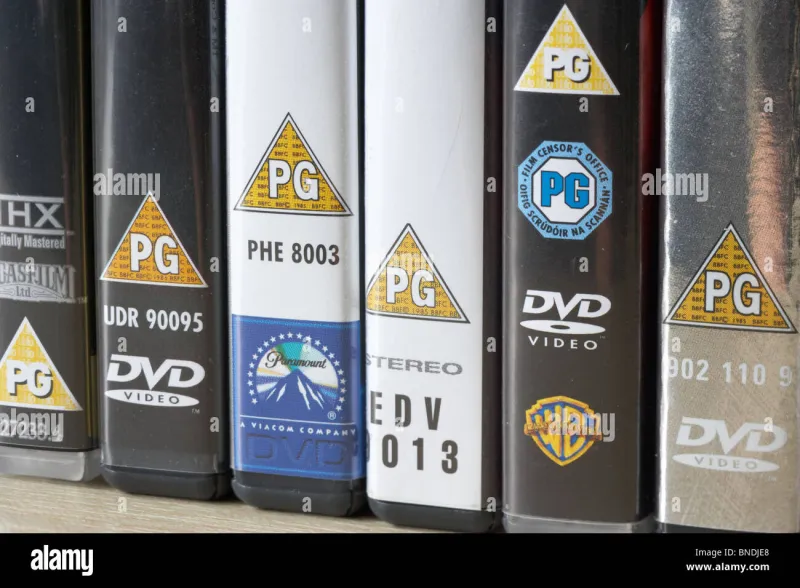
The postal DVD rental business was never glamorous, even in its heyday. LoveFilm — the company that briefly made the model mainstream in Britain before Amazon absorbed it and quietly wound down the disc side of the operation — was always more logistics exercise than cinematic passion project. But the people who kept operating after LoveFilm closed its physical media service in 2019 are a different breed entirely. These are enthusiasts first and businesspeople second, running operations that by any conventional commercial logic should not exist.
And yet here they are.
The Library as Living Archive
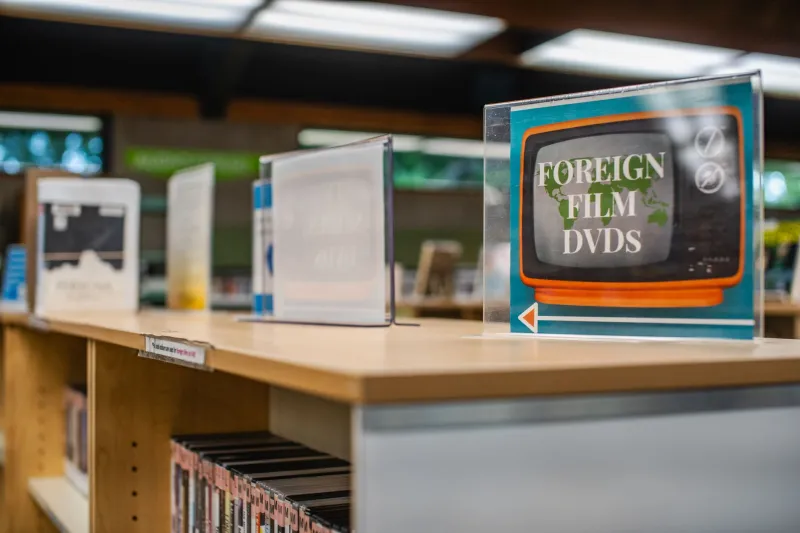
Spend any time talking to the operators of surviving postal rental services and one theme emerges almost immediately: the catalogue. These aren't businesses that stock whatever's cheapest to acquire or easiest to shift. They're curated collections, built over years with genuine editorial intention, and they reveal something important about the gaps that streaming has never adequately filled.
"People assume streaming has everything now," says one operator based in the East Midlands, who asked not to be named but has been running a postal rental service since 2007. "It doesn't. It has a lot of the same things in a lot of different places, and a huge amount of nothing. The films that matter to serious watchers — the ones with complicated rights histories, small audiences, no algorithm-friendly hook — those are on disc or they're nowhere."
 Photo: East Midlands, via image.shutterstock.com
Her library, housed in a converted outbuilding attached to her home, runs to somewhere north of 12,000 titles. She can tell you, without checking, whether she has a specific Taiwanese New Wave film from the mid-1980s, or the complete works of a particular British television playwright whose output has never been commercially released in any digital format. She almost certainly has it. That's the point.
Who's Still Renting?
The customer base for surviving postal rental services is, predictably, not representative of the general streaming audience. These are people who have already exhausted what the major platforms offer, who know exactly what they're looking for and have discovered that what they're looking for isn't available any other way.
Retired professionals feature heavily. So do academics, film students, and the kind of dedicated amateur cinephile who reads criticism seriously and approaches their viewing with something approaching scholarly rigour. There are also, perhaps unexpectedly, a significant number of people with accessibility needs — individuals for whom the physical rental model, with its simplicity and lack of technical demands, works better than navigating multiple streaming interfaces.
"My oldest regular subscriber is 84," says another operator, running a service from a terraced house in the north of England. "He's been with me for eleven years. Every fortnight he gets a disc, watches it, sends it back, and we have a brief exchange about it when he returns it. He's seen things through this service that he couldn't have seen any other way. That matters to me."
The loyalty of these remaining customers is, by all accounts, extraordinary. Churn is minimal. People who find a service that genuinely serves their needs — that stocks the things they actually want to watch, that operates with human reliability, that doesn't suddenly remove titles without warning — tend to stay.
The Curation Question
What distinguishes these services from a simple library is the degree of active curation involved. The best operators don't just acquire and catalogue: they recommend, they contextualise, they build relationships with subscribers around shared enthusiasms. One service includes handwritten notes with each disc, briefly explaining why the operator thought this particular subscriber might enjoy the title. Another runs a quarterly newsletter that functions as genuine film criticism, written by the operator and occasionally by subscribers.
This is, in miniature, exactly what the best physical media retailers have always done — what the great independent video shops of the 1980s and 1990s did before the chains and the supermarkets and eventually the internet made that kind of personal service economically impossible. The postal rental model, stripped of the overhead of a physical premises, has allowed a version of that curatorial tradition to survive into the present.
"I think of it as a conversation," says the East Midlands operator. "My subscribers aren't passive consumers. They tell me what they found in a disc that I didn't mention, they recommend things to me, they push back when I've steered them wrong. The service improves because of that. It's not like clicking a button and getting an algorithm."
The Honest Prognosis
None of this is to pretend that the economics are comfortable. Postage costs have risen substantially. Disc acquisition — particularly for the rarer titles that give these services their distinctive character — is increasingly expensive as the supply of second-hand physical media gradually tightens. The customer base, however loyal, is not growing.
The operators who are candid about this acknowledge that they're running against the clock to some degree. Not urgently — none of them expect to close tomorrow, or next year — but the direction of travel is clear enough. At some point, the arithmetic will stop working.
What would be lost if it did? The honest answer is: quite a lot. Not just the convenience of a particular service, but a genuinely significant portion of accessible film heritage. The titles that exist only on disc, that have never been digitised for any platform, that would effectively become unavailable to anyone without a collector's library of their own — these would become harder to reach, and for many viewers, unreachable entirely.
The red envelope, still making its way through the postal system, carries more inside it than a single disc. It carries a particular idea about what access to cinema should mean — comprehensive, curated, human, and stubbornly indifferent to what the algorithm thinks you ought to be watching. That idea is worth more than the postage.