Cut and Dried: The Homegrown British Films That Fell Foul of Their Own Censor
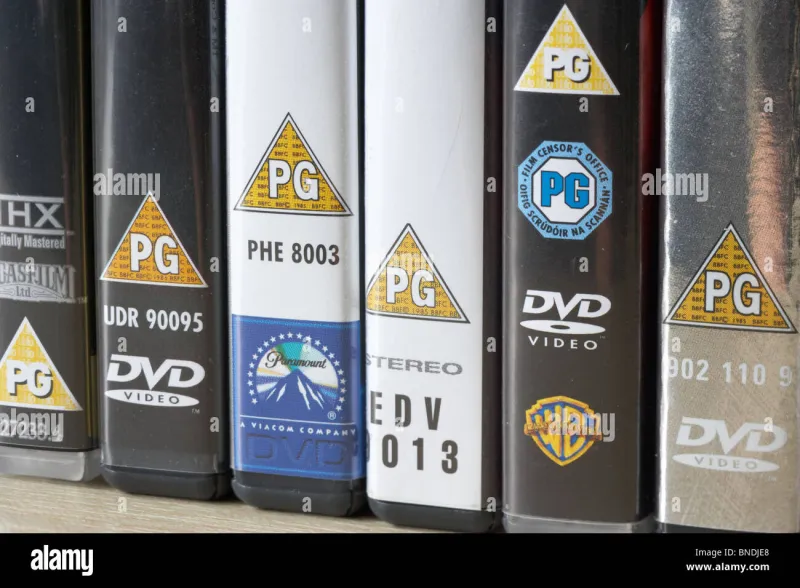
Photo: BBFC certificate label on DVD case close up, via c8.alamy.com
There's something almost absurd about the idea of a British film being censored for British audiences. You'd think homegrown productions would have an easier ride — surely the people making films in Soho or on location in the Yorkshire Dales have some intuitive sense of what the BBFC will and won't tolerate? And yet the history of British cinema on DVD is littered with domestic productions that arrived in UK living rooms in a form their directors never intended, trimmed and tidied by the very certification body that was supposed to serve the same audience the films were made for.
 Photo: Yorkshire Dales, via www.pitchup.com
The story is messier, funnier, and more revealing than it might first appear.
The Mechanics of a Domestic Cut
To understand why this happened, it helps to know a little about how the BBFC actually operates. The Board doesn't distinguish between foreign and domestic productions — a film is a film, and the same standards apply regardless of where it was made or who made it. A British director submitting their work for certification gets the same treatment as a Hollywood studio or a French arthouse distributor.
What this means in practice is that certain British productions — particularly those working at the edges of horror, sexuality, or violence — have found themselves in the peculiar position of being told to lose footage before their own countrymen could see them on disc. Sometimes the cuts were minor, a matter of seconds. Occasionally they were more substantial, removing scenes that the filmmakers considered integral to their work.
The horror genre is the obvious place to look. British horror has always had a complicated relationship with the BBFC — the Board's long history with the genre stretches back to the Hammer era and beyond, and the tension between domestic horror filmmakers and the certification process has generated some genuinely extraordinary rows.
Case Studies in Domestic Frustration
Consider the experience of several low-budget British horror productions from the early DVD era — the late 1990s and 2000s, when small independent companies were churning out genre films for the rental and sell-through markets. These weren't prestige productions with legal teams and the resources to fight certification battles. When the BBFC requested cuts, the practical reality was usually compliance: argue and risk losing your certificate entirely, or trim the offending footage and get your disc into the shops.
The results were sometimes bizarre. Films that had been shot with specific sequences in mind — sequences that served narrative or tonal purposes — arrived on DVD with those sequences simply absent. No explanation on the packaging, no indication that anything was missing. Buyers who'd read about the film in a genre magazine, or who'd caught a screening at a festival where the uncut print played, would sit down with their new purchase and find the film they'd seen and the film they'd bought were subtly, frustratingly different.
Director reactions varied enormously. Some were quietly furious but pragmatic — you pick your battles, and a minor cut on a DVD release isn't worth burning bridges over. Others were more publicly aggrieved, giving interviews to genre publications in which they made clear their feelings about the process. A handful went further and used the DVD format itself as a vehicle for protest, including deleted scenes sections that restored the cut footage with explicit commentary about why it had been removed.
"That was actually quite clever," notes one collector who specialises in British genre cinema from this period. "The film itself had to be certified in its cut form, but the extras didn't face the same restrictions in the same way. So you'd have this situation where the main feature was the sanitised version, but you could watch the missing bits as bonus content. It was almost confrontational."
The Rating Game
Not all domestic cuts were about violence or sexual content. Classification decisions — the difference between a 15 and an 18, or between a 12A and a 15 — sometimes prompted cuts that were more commercially than morally motivated. A British film aiming at a teenage audience might trim a scene not because anyone found it genuinely objectionable, but because an 18 certificate would have significantly narrowed its commercial prospects.
These cuts are in some ways more interesting from a collector's perspective, because they reveal the economic pressures behind certification decisions. The BBFC didn't always demand the cuts — sometimes distributors made them voluntarily and submitted the trimmed version specifically to achieve a lower rating. The Board simply certified what it was given.
The DVD era occasionally allowed for a kind of retrospective correction. A film released theatrically and on initial DVD in a cut form might later receive a special edition or reissue that restored the original footage, sometimes with a different certificate. Collectors with both versions have a tangible document of this process sitting on their shelves: two discs, same film, different running times, different certificates.
Accidental Collector Appeal
Here's where it gets genuinely strange. Some of the cut versions have developed their own collector interest — not because anyone prefers them to the uncut originals, but because they represent a specific moment in British film history. The BBFC-cut DVD of a particular British horror film from 2003 is, in its own way, as much a cultural artefact as the uncut version. It tells a story about regulation, commerce, and the relationship between British cinema and its domestic audience.
There's also the question of what the cuts actually look like in context. Edits made to satisfy the BBFC aren't always invisible — sometimes you can see the join, feel the missing beat, sense that something has been removed. For collectors interested in film craft, these moments of absence are oddly instructive. They reveal how scenes were constructed, what the filmmaker was trying to achieve, and why the missing footage mattered.
What Remains
The BBFC has liberalised considerably over the decades, and the kind of routine cuts that characterised the early DVD era are now far less common. Uncut releases are the norm rather than the exception for most genres. But the archive of cut British DVDs remains, scattered across charity shops and second-hand markets, carrying their truncated histories quietly inside.
For collectors, they're a reminder that the relationship between British cinema and British certification has always been a negotiation — sometimes cooperative, sometimes adversarial, always revealing something about what a society thinks it can and can't handle seeing. The discs that bear the marks of that negotiation are, in their way, as honest a document of British cultural life as the films themselves.