To Open or Not to Open: The Great British Sealed DVD Dilemma
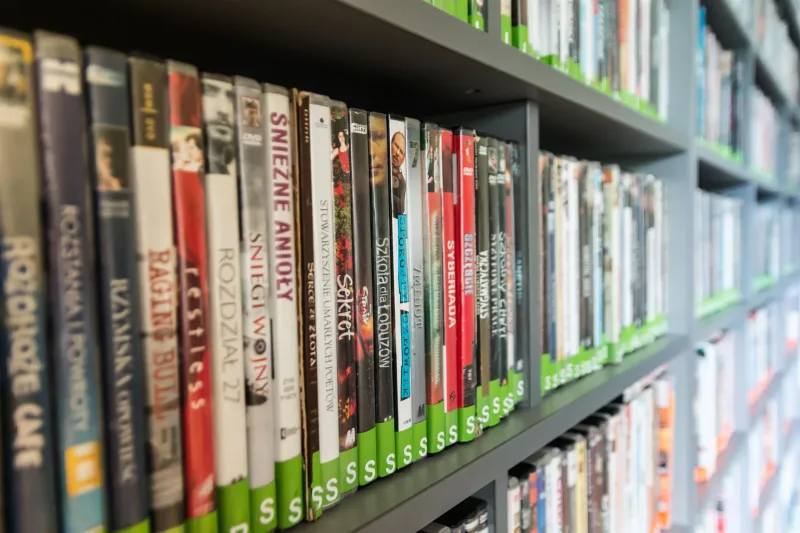
There's a particular kind of torment that only DVD collectors truly understand. You've hunted for months — trawling eBay listings at midnight, haunting charity shops in towns you'd otherwise have no reason to visit, paying a frankly alarming amount of postage from a seller in Dundee — and finally, it arrives. Sealed. Perfect. The shrink-wrap so tight and unmarked it looks like it left the factory this morning.
And then you have to decide what to do with it.
For a certain kind of British collector, this is not a trivial question. It sits somewhere between philosophy and mild psychological crisis. Because the whole point of owning a film is watching it. But the whole point of collecting is the condition. And once that seal is broken, it's broken forever.
The Mint Condition Myth
Let's be honest about something first. The monetary argument for keeping things sealed is often overstated. Unless you're sitting on a genuinely rare first pressing of a limited boutique release — something from Arrow Video or Eureka's Masters of Cinema line, numbered and out of print — the financial premium for a sealed disc over a very fine open copy is usually modest. Collectors who cite resale value as their primary reason for not opening things are, more often than not, using economics as cover for something more emotional.
"It's not really about money," admits Paul, a collector from Bristol who has accumulated over 400 sealed titles across twenty years. "It's about the idea of it. A sealed disc is potential. It's perfect. The moment you open it, it becomes just another thing you own."
That sense of potential — the film existing in a kind of pristine suspended state — is something several collectors mentioned when we asked about their sealed shelves. There's a strange comfort in knowing something is untouched, uncorrupted by the mundane act of being watched on a Tuesday evening with a takeaway.
When Preservation Becomes Paralysis
Of course, there's a point at which this crosses from curation into something slightly absurd. More than one collector we spoke to admitted to owning films they genuinely love but have never watched in their current disc form — because the copy they own is too good to open.
Susan, a collector from Edinburgh with a particular focus on British horror, described buying a sealed UK pressing of a mid-seventies Hammer title at auction, then immediately going online to find a cheaper reading copy to actually watch. "I own the film twice now," she laughs. "Once to look at, once to enjoy. My husband thinks I've lost the plot entirely."
This is, it turns out, far more common than you might expect. The "reading copy" solution — buying a second, more affordable version purely for viewing — is practically an unofficial standard practice among serious collectors. It's a workaround that acknowledges the dilemma without resolving it, and it costs money, which is perhaps why collectors are reluctant to advertise it too loudly.
The Elaborate Workarounds
Beyond the reading copy approach, British collectors have developed a surprisingly creative range of solutions to the open-or-not problem.
Some use digital rips — legally dubious but practically widespread — to watch the content while the physical disc remains sealed. Others buy region-free players specifically so they can import a foreign pressing of a title they own sealed domestically, watching the American or German version while the UK copy stays pristine on the shelf. There's a whole community of collectors who have essentially built parallel watching libraries alongside their display collections.
Then there are those who go the other direction entirely. Mark, a retired teacher from Shrewsbury who collects predominantly British television box sets, has a strict rule: everything gets opened within a fortnight of arrival. "The whole point is to watch them," he says, with the mild impatience of someone who has heard the counterarguments many times. "If I wanted something to look at, I'd buy a painting."
His shelves are immaculate — carefully stored, spines outward, alphabetised — but every single case has been opened. He considers the opened state the natural condition of a loved collection, in the same way a well-read book has a certain authority over a pristine unread one.
The Spine Crack as Ritual
For those who do eventually decide to open a cherished sealed disc, the moment itself carries a weight that probably seems disproportionate to anyone outside the hobby. Collectors describe it in terms that wouldn't sound out of place applied to something far more significant.
"You run your thumbnail along the edge very carefully," says Paul. "Sometimes the wrap comes off in one piece. Sometimes it tears. If it tears, you feel it."
The physical sensation of breaking the seal — that slight resistance, the soft crackle of shrink-wrap releasing — is the point of no return. It's irreversible in a way that very few things in modern life actually are. In a world where almost everything can be undone, updated, or returned, the opened disc is permanent.
Some collectors keep the shrink-wrap. Carefully removed, flattened, stored inside the case or in a small envelope tucked behind the booklet. It's a slightly melancholy gesture — an acknowledgement that the sealed state mattered, even if the decision to move past it was the right one.
What It Actually Says About Collecting
The sealed disc debate is, at its core, a conversation about what collecting is actually for. Is a collection a library — a personal archive built for use and revisitation? Or is it something closer to a museum, where the objects themselves are the point, independent of their content?
Most serious collectors land somewhere complicated in the middle, and the sealed disc is where that complexity becomes visible. It's the object that forces you to articulate, at least to yourself, what you're actually doing with all those shelves.
For what it's worth, our view at Beck's is pretty straightforward: films are made to be watched. The disc is the vessel, not the destination. But we also understand, completely, why some of you will read that and immediately think of three titles currently sitting sealed on your shelf that you absolutely cannot bring yourself to open.
You're not alone. And there's no wrong answer. Probably.