After the Collector: The Uncomfortable Question Britain's DVD Enthusiasts Are Finally Asking
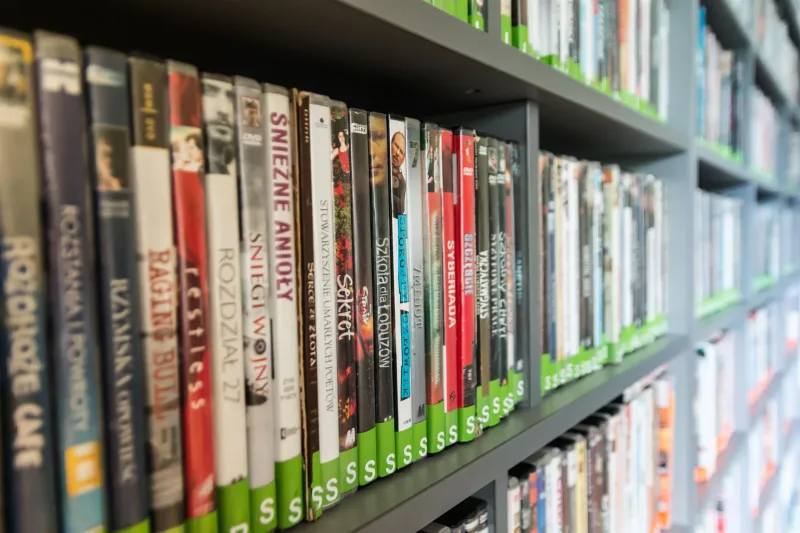
Somewhere in a semi-detached house in Coventry, there are four hundred and sixty-three DVDs that nobody wants.
They belonged to a man named Gerald, who spent thirty years building one of the most thoughtfully assembled collections of British cinema his family had ever seen — though, admittedly, his family had never paid it much attention. Gerald died two years ago. His wife, practical and kind and entirely uninterested in film, called a local charity shop. They took three boxes. The rest went to the tip.
This story, or versions of it, plays out across Britain with a regularity that serious collectors find genuinely distressing — when they allow themselves to think about it, which most prefer not to.
The Unspoken Anxiety
Ask most dedicated collectors about the future of their collection and you'll notice a small but telling pause before they answer. They'll talk about cataloguing systems, about which titles they're still hunting, about the next boutique label announcement. What they won't immediately volunteer is what they actually plan to do with it all when they're no longer around to care for it.
This isn't unique to DVD collectors, of course. Anyone who has spent decades accumulating anything — books, vinyl, ceramics, stamps — faces the same eventual reckoning. But there's something particular about a DVD collection that makes the succession question especially pointed. Unlike vinyl, which has enjoyed a full cultural rehabilitation and commands genuine mainstream respect, physical media remains slightly on the defensive. The people most likely to inherit a disc collection are also, statistically, the people most likely to assume it has no value and act accordingly.
"My children are lovely," says Margaret, a retired teacher from York whose collection of over a thousand titles spans British television drama, European art cinema, and a formidable run of classic Hollywood. "But they stream everything. They don't own a single disc between them. I've tried to explain what some of this is worth — not just financially, but culturally — and I can see them trying to look interested."
She laughs, but it's not entirely a happy laugh.
When Collections Arrive Unexpectedly
The other side of this story involves the collectors who have found themselves on the receiving end of someone else's life's work.
Robert, a collector from Glasgow, inherited his uncle's entire collection four years ago — roughly six hundred discs, accumulated over twenty years, stored in a spare room his uncle had dedicated entirely to the purpose. "I didn't really know him that well," Robert admits. "He was a quiet man. But going through those shelves, I felt like I was meeting him properly for the first time."
The collection was, he discovered, extraordinary — a deeply personal archive that revealed taste, obsession, and care in equal measure. His uncle had a particular passion for Italian genre cinema, a subject Robert knew nothing about, and had assembled what amounted to a comprehensive education in the field. Robert has since watched his way through most of it. He considers it among the most significant things he's inherited.
Not everyone is so lucky in what they receive, or so receptive when they receive it. Charity shop workers in towns across Britain will tell you, with weary familiarity, about the bags and boxes of DVDs that arrive in the weeks after bereavements — sometimes still in the careful alphabetical order the owner maintained, sometimes hastily bundled together, occasionally accompanied by handwritten catalogues that nobody thought to read.
The Cataloguing Impulse
In response to this anxiety — rarely articulated openly, but clearly present — some collectors have started taking practical steps. The most common is meticulous documentation: spreadsheets listing every title, its edition, its condition, and any relevant context about why it was acquired or what makes it significant.
This is partly about establishing value for whoever inherits the collection. But it's also, several collectors admitted, about something more personal: the hope that whoever comes after them might understand what they were trying to build, and why it mattered.
"I've written notes," says Phil, a collector from Norwich whose particular focus is British horror and cult cinema. "Not for every disc, but for the important ones. What it is, why I wanted it, why this particular pressing rather than another one. I don't know if anyone will ever read them. But I wanted there to be a record."
There's something quietly moving about this — the collector as archivist, annotating not just for their own reference but for an imagined future reader who might, if they're curious enough, come to appreciate what they've stumbled into.
The Harder Conversations
A small but growing number of collectors are going further, having explicit conversations with family members about their intentions. Some have identified other collectors — friends, online acquaintances met through forums and Facebook groups — who might be willing to take on specific parts of a collection, ensuring particular titles end up with people who will value them.
Others have looked into more formal options: libraries, universities with film studies departments, local archives. The BFI's collections are an obvious point of reference, though the scale of what private collectors have accumulated means that institutional absorption is rarely practical for anything other than genuinely rare or unique items.
The honest truth, which most collectors will acknowledge when pressed, is that there's no perfect solution. A collection that took decades to build, title by title, guided by a singular and irreplaceable sensibility, cannot be fully transferred to anyone else. The object can pass on; the meaning it held for its original owner cannot.
What Remains
Maybe that's all right. Collections are, ultimately, a form of autobiography — a record of what mattered to someone, and when, and why. The fact that they don't survive intact is not so different from the fact that most autobiographies are never read cover to cover by the people they're bequeathed to.
What does survive, sometimes, is the habit. The child who grows up surrounded by a parent's collection and absorbs, almost without noticing, a love of physical media. The friend who takes a single box of discs from an inherited pile and discovers, through them, a filmmaker they'd never encountered. The charity shop customer who picks up something on a whim and finds something that changes what they watch for the next ten years.
Gerald's collection mostly went to the tip. But three boxes went to a charity shop in Coventry. Somewhere out there, someone is watching one of his films without knowing anything about the man who chose it. That's not nothing.
It's not everything, either. But it might be enough.