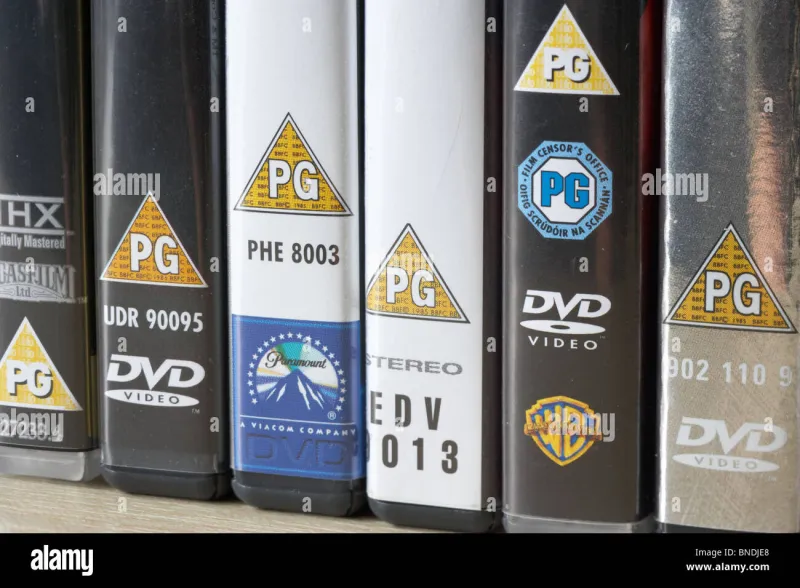
Cropped Again: The Infuriating Truth Behind Britain's Aspect Ratio Disasters
There's a particular kind of frustration reserved for the collector who opens a newly purchased DVD, presses play, and watches a film they know intimately appear on screen looking subtly — or not so subtly — wrong. The compositions feel off. Heads are being cropped. Widescreen vistas that should stretch to the edges of the picture are being compressed into something approaching a square. The film is there, but it isn't quite right, and the wrongness is the sort that, once spotted, cannot be unseen.
This is the aspect ratio problem. And in the UK, it keeps happening.
What We're Actually Talking About
For anyone who needs a quick primer: aspect ratio refers to the proportional relationship between a picture's width and height. Films are shot in various ratios — 1.33:1, 1.85:1, 2.35:1, and numerous variants — and presenting them incorrectly either crops the image (losing information from the sides or top and bottom) or stretches and squashes the picture in ways the director never intended.
The pan-and-scan era of VHS gave us a generation accustomed to watching widescreen films in a butchered full-frame format. DVD was supposed to fix all that — and largely did, at least initially. But the problems didn't disappear. They evolved. And some of the worst offenders have been reissues of films that were previously released correctly, somehow managing to get it wrong on the second or third attempt.
The Reissue Problem
Here's what makes this particularly galling: a first pressing gets it right. The film is presented in its correct theatrical ratio, the transfer is decent, collectors are happy. Years pass. Rights change hands, or the label decides to refresh the release with new packaging, or a budget edition is commissioned for a wider retail push. And somehow, in the transition, the aspect ratio gets mangled.
How does this happen? The honest answer involves a chain of small failures that add up to one large, visible mistake. Source materials get swapped without adequate checking. A telecine transfer originally prepared for broadcast — where aspect ratio considerations are different — gets repurposed for a disc release without correction. A new encode is commissioned from a different master, and nobody in the approval chain actually watches it properly before it goes to press.
Quality control in physical media production is, to put it charitably, inconsistent. At the boutique end of the market, releases go through rigorous technical checks. At the budget end — and even, sometimes, at the mid-range — the process can be alarmingly casual. A disc gets played through on a monitor, someone confirms the picture is there and the audio works, and it ships.
Collectors Remember Everything
The collecting community has an institutional memory that puts most corporate archives to shame. The forums have documented dozens of UK releases where aspect ratio errors have crept into reissues, often with side-by-side comparisons that make the problem impossible to deny.
The pattern that emerges from these threads is consistent: the error is rarely spotted before release. By the time collectors flag it publicly, tens of thousands of copies have already shipped to retailers across the country. The label's response, when one comes at all, tends to range from embarrassed silence to a brief acknowledgement that the issue is "being looked into."
Replacement programmes — where a label offers to swap incorrect discs for corrected ones — do happen, but they're the exception rather than the rule, and they typically require the collector to be paying close attention to the right forums at the right time. Plenty of people who bought the wrong version never find out, which is arguably worse: they watch a subtly wrong film for years without knowing it.
The Broadcast Master Problem
One specific culprit comes up repeatedly in collector discussions: the broadcast master.
Television has its own aspect ratio conventions, and when a distributor is sourcing a transfer on a budget, it's tempting to use a master that was prepared for broadcast rather than commissioning a new one from the original camera negative or interpositive. Broadcast masters are often already encoded, already graded, already ready to use. The problem is that they may have been prepared with pan-and-scan adjustments, slight reframings, or ratio changes made to suit transmission standards that don't apply to a disc release.
This is particularly common with older British films and television productions, where the original materials may be held by broadcasters rather than specialist archive facilities, and where the distinction between the theatrical version and the broadcast version isn't always clearly flagged in the paperwork that accompanies a rights deal.
Will the Wrong Versions Become Collectables?
It's a question that comes up with genuine seriousness in collector circles, and the answer is more complicated than it might seem.
There's a precedent for error pressings becoming desirable — certain misprinted covers, incorrectly labelled discs, and recalled editions have acquired genuine collector value over time, precisely because of their wrongness. The question is whether an aspect ratio error rises to the same level of noteworthiness.
For most collectors, the answer is probably no. An incorrect aspect ratio isn't a charming quirk; it's a functional failure that makes the film worse to watch. The appeal of error pressings generally lies in their visual distinctiveness — a cover misprint is interesting to look at. A squashed picture is just annoying.
That said, there are a handful of cases where the incorrect version has become historically significant simply because it was in circulation long enough to be many people's primary experience of a particular film. In those cases, there's an argument — a slightly uncomfortable one — that the wrong version has its own documentary value.
What Needs to Change
The frustrating reality is that aspect ratio errors are almost entirely preventable. The tools to check a transfer are not exotic or expensive. Watching the first and last reel of a disc before it goes to press, with a reference image to hand, would catch the majority of problems before they reach consumers.
What's required is the will to do it — and a commercial environment that punishes failure adequately. At present, the consequences of getting it wrong are limited: some bad forum posts, a few returns, the occasional embarrassing correction notice. For a label operating on thin margins with a release schedule to maintain, the temptation to move on rather than fix it is understandable, if not forgivable.
British collectors deserve better. They're buying physical media specifically because they care about presentation — because the format promises a definitive, archivally sound version of a film they love. An incorrect aspect ratio isn't a minor inconvenience. It's a betrayal of the fundamental promise the format makes. And until the industry treats it with the seriousness it deserves, collectors will keep opening boxes, pressing play, and feeling that familiar, sinking wrongness settle over the picture.