Boot Sales, eBay Bids and a Surprising Profit: Inside Britain's Booming Second-Hand DVD Trade
Ask anyone who's spent a Sunday morning shuffling through a damp car boot sale in Staffordshire or scrolling through completed eBay listings at midnight, and they'll tell you the same thing: DVDs are not dead. Not even close. In fact, for a growing number of people across Britain, they've become something rather unexpected — a genuine source of income.
The second-hand DVD market in the UK is, quietly and without much fanfare, absolutely thriving. Whether it's a retired teacher in Exeter who's turned her late husband's collection into a tidy side income, or a twenty-something in Manchester running a curated eBay shop shifting rare horror pressings to buyers in Germany and Japan, the resale economy around physical media has developed its own rhythms, its own logic, and — for those who know what they're doing — its own very real rewards.
The Car Boot Frontline
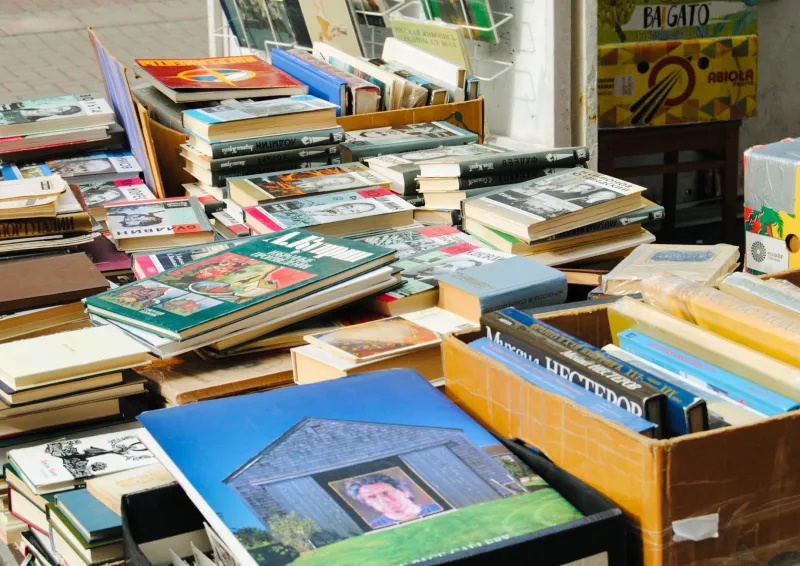
Let's start where most of this begins: the boot sale. Every weekend, tens of thousands of DVDs change hands at pitches across the country for anywhere between 50p and a fiver. Most of it is mainstream fare — romantic comedies, mid-2000s action films, the kind of thing that got bulk-bought from Woolworths and never watched twice. But buried in those crates, often priced at the same 50p as a copy of Mamma Mia, are discs that serious resellers will cheerfully flip for £30 or more.
Dave, who runs a stall most Sundays at a market outside Coventry, has been doing this for four years. "I started just clearing out my own stuff," he says. "Then I realised I was making more from the DVDs than the furniture. Now I go to other people's sales first thing, grab what I know, and I'm selling it on by Tuesday."
His knowledge base, built largely through trial, error, and a lot of completed listing research, is impressive. He knows that certain Arrow Video and BFI releases hold value. He knows that out-of-print anime box sets from Manga Entertainment can command serious premiums. He knows that a mint-condition copy of a niche documentary series is worth more than a dozen copies of The Dark Knight in cracked cases.
That knowledge is the real currency of this trade.
eBay's Hidden DVD Economy
The platform doing the heaviest lifting for Britain's disc resellers is, unsurprisingly, eBay. A quick trawl through completed listings tells a fascinating story about which titles the market actually values. Boutique label releases — from the likes of Indicator, Eureka, and Second Sight — routinely sell for two to three times their original retail price once they go out of print. Limited numbered editions from Arrow's early years regularly fetch £60 to £100, sometimes considerably more if the packaging is pristine.
But it's not just the collector-grade stuff. Certain mainstream titles that quietly went out of print — BBC drama box sets, Channel 4 catalogue releases that never made the digital leap — have developed their own secondary market. A complete run of a mid-period ITV detective series, the sort of thing that sold for £9.99 in the supermarket bargain bin a decade ago, can now attract bids north of £40 if it's never been reissued on streaming.
Sarah, who has been selling DVDs online since 2019, estimates she turns over between £800 and £1,200 a month from her eBay shop alone. "I'm not buying anything exotic," she says. "I'm just paying attention. I know what's been deleted. I know what people are searching for. And I know how to photograph a disc properly so it looks its best."
That last point is worth noting. Presentation matters enormously in online resale. A well-lit photo showing a clean disc, intact booklet, and unscratched case will always outperform a blurry snap of the same item sitting on a kitchen worktop.
Which Titles Hold Their Value?
For anyone thinking about approaching their collection as an asset rather than just a hobby, the question of value retention is crucial. The answer, broadly, comes down to a few consistent factors.
Scarcity is the obvious one. Once a title goes out of print and doesn't resurface on streaming, demand from collectors who want a physical copy tends to push prices upward. This is particularly true for titles from smaller distributors who didn't have the infrastructure to maintain large stock runs.
Extras matter too. A bare-bones release of a beloved film rarely commands much of a premium. But a disc loaded with a commentary from a respected critic, an archival making-of, and a 40-page booklet? That's a different proposition entirely, especially if the label in question has since folded or moved on.
Condition is, as always, everything. The UK collector market is notably unforgiving of damaged packaging. A cracked case, a water-damaged sleeve, or — worst of all — a missing booklet can reduce a disc's resale value by half or more.
Genre plays a role as well. Horror, cult cinema, classic British television, and world cinema from boutique labels consistently outperform mainstream Hollywood releases on the secondary market. There are dedicated communities of buyers for each of these areas, and those communities tend to be both passionate and persistent.
A Sustainable Alternative to Streaming's Churn
There's something else going on beneath the surface of all this buying and selling, though — something that speaks to a broader disillusionment with how entertainment is currently packaged and delivered.
Streaming services are inherently impermanent. Catalogues shift, licensing deals expire, and films that were available last month simply vanish without warning. For many British viewers, particularly those who grew up with the ritual of browsing shelves and building collections, this feels fundamentally unsatisfying. The second-hand DVD market offers an alternative model: one where ownership is real, where the thing you've paid for stays in your possession, and where — if you choose wisely — your collection might actually appreciate rather than depreciate.
"I think of it like a record collection," says Dave. "Nobody thinks you're weird for having vinyl. DVDs are the same thing. You own it. It's yours. And sometimes it goes up in value. That's not a bad deal."
It's not a bad deal at all. And for a growing number of people across Britain — sellers and buyers alike — it's becoming a quietly significant part of their financial lives.